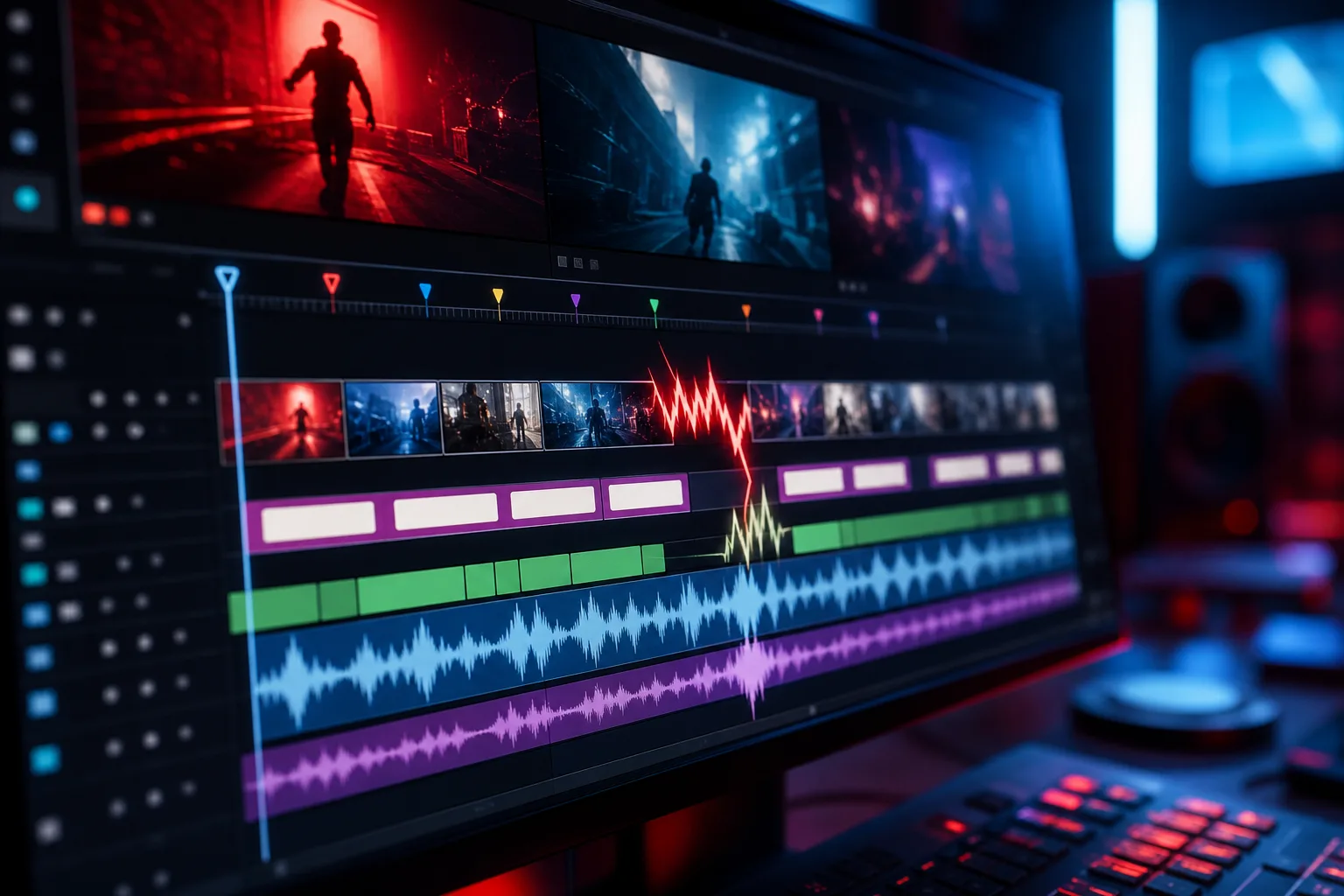

A professional YouTube editor improves retention by reviewing raw footage, sequencing the story, removing pauses and irrelevant material, shaping hooks and pacing, adding captions and graphics, cleaning audio, and using retention data to revise weak moments. What a Professional YouTube Editor Actually Does for Retention can be evaluated through metrics such as average view duration and the first-30-second intro measure.
Channel facts
- The intro metric reports the percentage of viewers still watching after the first seconds.
- Average view duration measures the average minutes watched among viewers who stayed to watch.
- Short-form guidance recommends a hook in the first 0–1 seconds.
- Audience-retention data typically takes 1–2 days to process, while another source reports availability after hours.
- The available source claims professional editing can produce 40–60% higher viewer retention than basic editing.
Your takeaways
- Define the editor’s scope around footage organization, cuts, graphics, captions, audio, and calls to action.
- Read retention graphs by timestamp, then inspect the preceding ten seconds around sharp drops.
- Use format-specific hooks and visual changes rather than applying one pacing rule to every video.
- Compare similar videos and validate revisions with saved before-and-after retention snapshots.
- Treat reported retention improvements as source claims, not guaranteed outcomes.
What a Professional YouTube Editor Actually Does for Retention
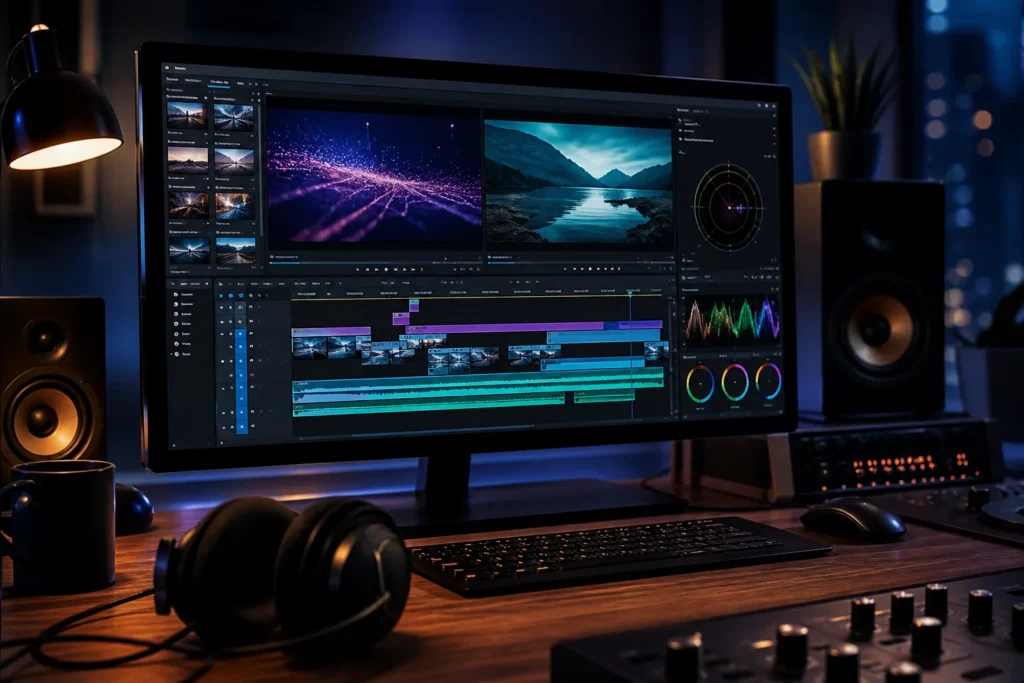
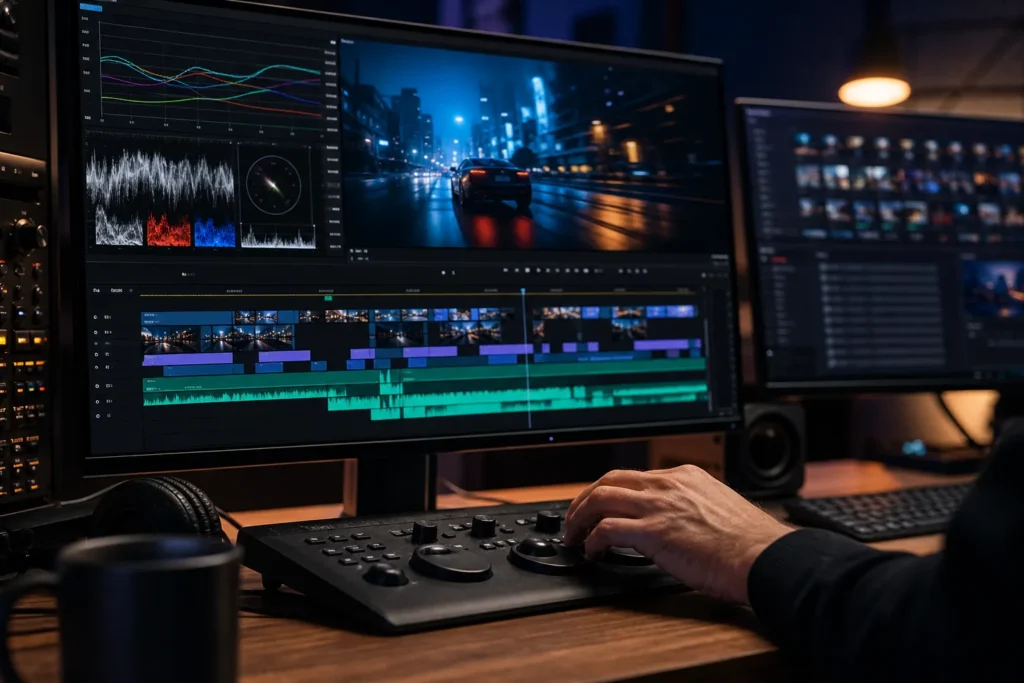
A YouTube video editor starts by reviewing raw footage, organizing events into a logical sequence, and shaping the story flow. What a Professional YouTube Editor Actually Does for Retention begins with deciding what belongs in the cut and what distracts from the story. Cutting pauses, mistakes, and irrelevant material can create smoother flow while protecting clarity and the story payoff.
What a Professional YouTube Editor Actually Does for Retention also includes transitions, clip emphasis, graphics and text, subtitles, and calls to action. Editors may balance speech and music, reduce background noise, and add sound effects or background music. The supplied claims don’t support a separate description of color correction or grading, so those tasks remain unspecified here.
For Faceless Channel Lab, What a Professional YouTube Editor Actually Does for Retention fits within a wider YouTube Automation workflow involving outsourced production and repeatable channel operations. Post-publication editing is also possible through YouTube’s video editor, including a trim-and-cut workflow.
Which YouTube retention metrics can an editor use to identify where viewers stop watching?
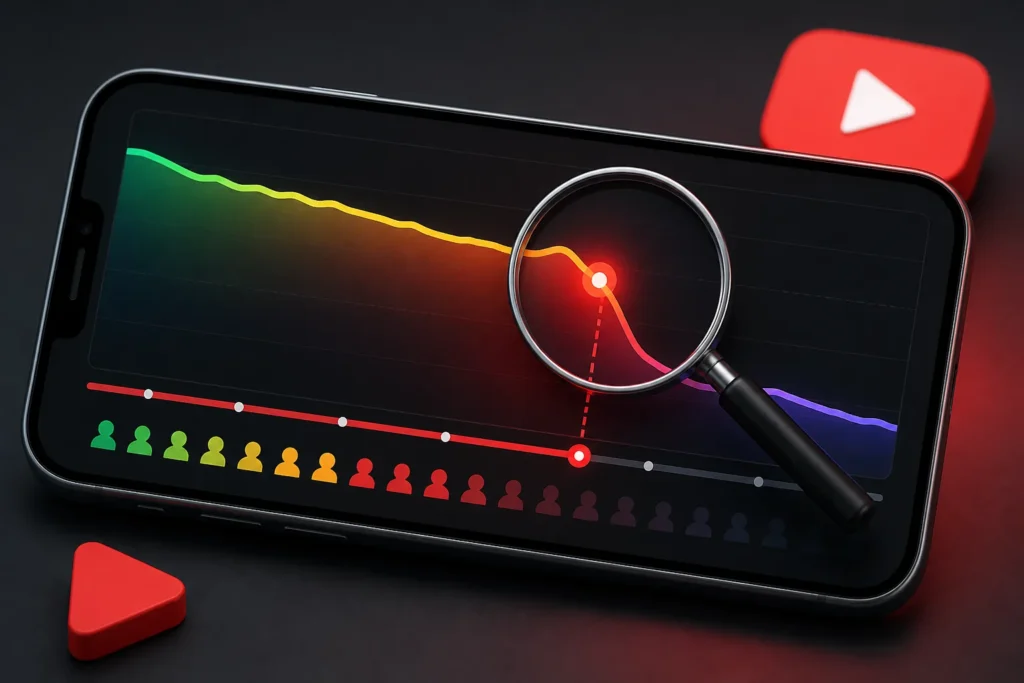
An audience-retention graph shows the percentage of viewers still watching across the video’s timeline. What a Professional YouTube Editor Actually Does for Retention is read from that curve: timestamps and sharp step-downs can identify likely exit points, and an editor can scrub to the timestamp and watch the preceding ten seconds.
What a Professional YouTube Editor Actually Does for Retention uses the intro metric, which reports the percentage still watching after the first seconds. Average view duration is the average minutes watched, average percentage viewed is the portion of the video watched, and watch time is the amount of time viewers watched. Absolute retention shows the percentage watching at each moment, while relative retention compares a video with similar-length videos.
Top moments are points where almost no one dropped off, while detailed activity shows when viewers started and stopped watching. Audience segments can compare new and returning viewers, subscribers and non-subscribers, and organic and paid traffic. Data typically takes 1–2 days to process, although another source reports availability after hours.
How do hooks, pacing, cuts, captions, and pattern interrupts affect retention, and where should an editor use them?
Strong opening hooks, deliberate pacing, and attention-holding techniques support viewer retention. What a Professional YouTube Editor Actually Does for Retention means delivering the core premise within the first seconds, cutting opening fluff, and placing valuable content earlier. Teasers or quick wins can give viewers a reason to continue every two to three minutes.
What a Professional YouTube Editor Actually Does for Retention varies by format. Short-form guidance recommends a hook in the first 0–1 seconds, pattern interrupts every 3–5 seconds, and value every 2–4 seconds. Longer videos needn’t follow those short-form intervals: one guide recommends candidate rehooks or visual shifts every two minutes, with changes among talking head, screen share, close-up, and cutaway.
What a Professional YouTube Editor Actually Does for Retention includes captions and text overlays that support muted viewing. One source reports that 85% of social video is watched on mute, while another claims captions can increase average view duration by 40% or more.
How does an editor use audience-retention data to revise a video’s structure and pacing?
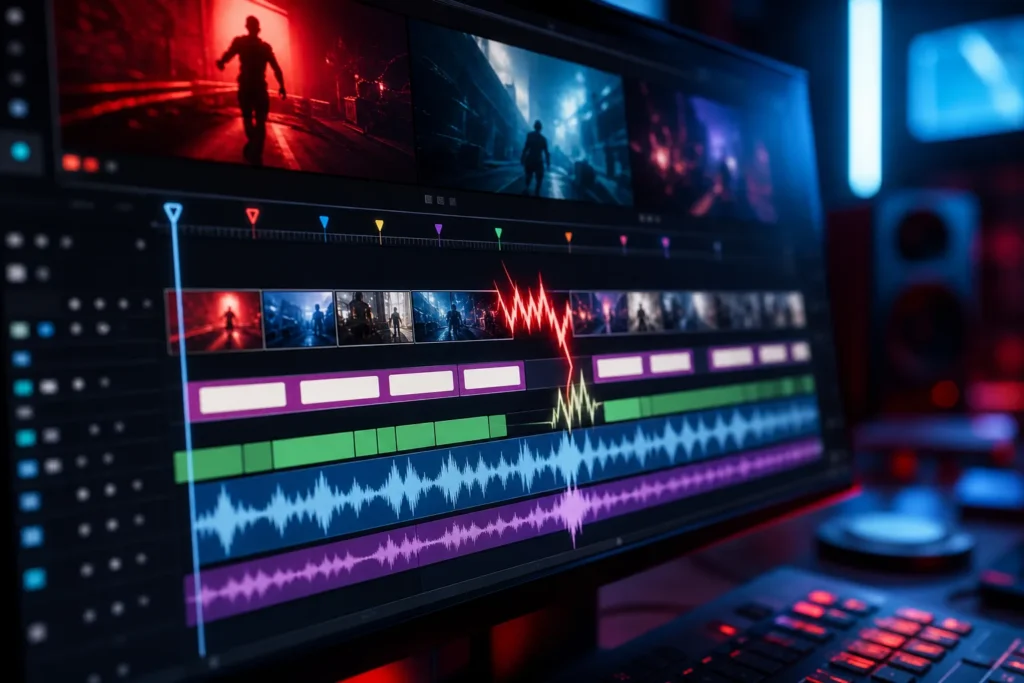
A repeatable retention audit starts with the last ten videos, identifies the top and bottom three by average percentage viewed, and establishes a baseline. What a Professional YouTube Editor Actually Does for Retention then records major drop-off timestamps and what was happening at each point, looking for recurring patterns across videos.
What a Professional YouTube Editor Actually Does for Retention requires diagnosis before cutting. At a sharp step down, scrub to the timestamp and watch the preceding ten seconds; the problem may be a cut, transition, explanation, or structural delay. Revisions can add visuals, divide complex explanations into smaller chunks, cut weak segments, or move useful material earlier. If top moments occur late, introducing that compelling material earlier is also supported guidance.
What a Professional YouTube Editor Actually Does for Retention should be validated after publication by monitoring the updated curve and comparing saved before-and-after snapshots. Compare videos in a similar niche and of similar length, and don’t attribute every retention difference to editing alone.
What should creators look for in an editor’s portfolio or past retention results when deciding whom to hire?
A hiring review should look for evidence that an editor can extract and organize useful footage to improve watch time and viewer retention. What a Professional YouTube Editor Actually Does for Retention is visible in story sequencing, clear pacing, readable captions, purposeful graphics, clean audio, and cuts that preserve emotional context. Raw-footage review and logical sequencing are explicit editor tasks.
What a Professional YouTube Editor Actually Does for Retention can also be tested with before-and-after audience-retention graphs, average view duration, and average percentage viewed. Ask whether the comparison uses similar video types and lengths, because unrelated benchmarks can mislead.
What a Professional YouTube Editor Actually Does for Retention shouldn’t be judged by effects alone. The available source claims professional editing can produce 40–60% higher viewer retention than basic editing, but that is a source claim rather than a guaranteed outcome. Transitions, text, subtitles, calls to action, speech-and-music balance, noise reduction, and sound effects should serve the cut rather than obscure it.
How much does a professional YouTube editor typically charge, and which factors affect the price?
No typical price, rate range, or source-backed list of pricing factors appears in the available claims. What a Professional YouTube Editor Actually Does for Retention therefore can’t be converted into a reliable cost figure from this evidence, and you shouldn’t treat an invented estimate as fact.
What a Professional YouTube Editor Actually Does for Retention can still define the hiring scope. A brief can document footage organization, cutting pauses and mistakes, transitions, clip emphasis, graphics and text, subtitles, calls to action, audio balancing, noise reduction, music, and sound effects. Those tasks give you a clearer production discussion without implying an unsupported package price.
What a Professional YouTube Editor Actually Does for Retention should fit Faceless Channel Lab’s outsourced YouTube Automation workflow and repeatable channel operations. The reported 40–60% retention claim concerns performance, not what an editor charges. No source-backed savings claim or pricing model is available.
What is the 7-second rule on YouTube, and how should editors apply it without delaying the video’s main payoff?
No available source establishes a YouTube-specific seven-second rule. What a Professional YouTube Editor Actually Does for Retention is therefore not a fixed seven-second formula. One source recommends a strong hook in the first eight seconds, while short-form guidance recommends a hook in the first 0–1 seconds.
What a Professional YouTube Editor Actually Does for Retention means establishing the premise early, cutting fluff, branding, and long explanations before delivering value. The core premise should arrive within the first seconds, with valuable content placed earlier rather than saved for the end.
What a Professional YouTube Editor Actually Does for Retention can still preserve a later promised result when earlier segments resolve something of their own. The opening decision connects to the intro metric, which measures the percentage still watching after seconds.
How does the/20 rule apply to editing decisions that have the greatest effect on retention?
The available claims don’t define an/20 rule for video editing. What a Professional YouTube Editor Actually Does for Retention can therefore support a data-led priority list, but not a specific percentage assigning most results to particular tasks.
What a Professional YouTube Editor Actually Does for Retention starts by inspecting the opening, major retention dips, recurring drop-offs, retention peaks, and sections where viewers skip ahead. A steep first-15-second drop that loses at least 20% of viewers suggests that the opening may not be engaging enough. Clusters of viewers skipping ahead can indicate weak sections, while peaks can show content worth placing earlier in future videos.
What a Professional YouTube Editor Actually Does for Retention prioritizes changes identified by those signals: shorten weak intros, move valuable content earlier, add visuals, and restructure complex explanations. The supported method is numerical measurement followed by targeted action; the numerical/20 allocation remains unknown.
See it in action
What retention risks can come from aggressive cuts, effects, or music, and how can an editor avoid them?
Aggressive editing can damage viewer retention when pattern interrupts feel chaotic or over-editing exhausts viewers. What a Professional YouTube Editor Actually Does for Retention requires restraint: transitions should mark scene changes, revelations, emotional peaks, or other story progress rather than add noise.
What a Professional YouTube Editor Actually Does for Retention includes matching the editing style to the audience instead of trying to impress other editors. Sound effects can reinforce on-screen action, but they should be used in moderation. Speech and music need balance, and background noise should be reduced. For a talking-head jump cut, cutting on a breath is preferable to cutting mid-word because a mid-gesture cut can look jarring.
What a Professional YouTube Editor Actually Does for Retention ends with measurement: make targeted changes at data-identified moments, monitor the updated curve, and compare saved before-and-after snapshots.
| Editing approach or study | Retention-related finding |
|---|---|
| Professional editing (thisgirledits.com) | can produce 40–60% higher viewer retention than basic editing. |
| Short-form videos with consistent pattern interrupts (increditors.com) | see 2–3x higher completion rates than videos without them. |
| Adding captions (increditors.com) | can increase average view duration by 40% or more by retaining muted viewers. |
| AIR analysis of long-form channels (air.io) | the top 25% by average view duration held viewers 20–30% longer than the rest of… |
| A steep drop in the first seconds (longstories.ai) | that loses at least 20% of viewers suggests the opening is not engaging enough. |
Faceless channel questions
- How many views do I need to make $10,000 a month on YouTube?
No source in the available claims establishes how many views are needed to make $10,000 a month on YouTube. A reliable figure is therefore unknown.
- How much do professional YouTube editors make?
The available claims don’t provide a typical salary, rate, or earnings range for professional YouTube editors. That figure is unknown from the supplied evidence.
- What is the/20 rule in video editing?
The available claims don’t define an/20 rule for video editing or assign a percentage of results to particular editing tasks. A data-led priority list is supported, but a numerical allocation is unknown.
- What is the second rule on YouTube?
The available claims don’t establish a YouTube-specific seven-second rule. They do support using a strong hook within the first eight seconds, while one short-form guide recommends the first 0–1 seconds.
