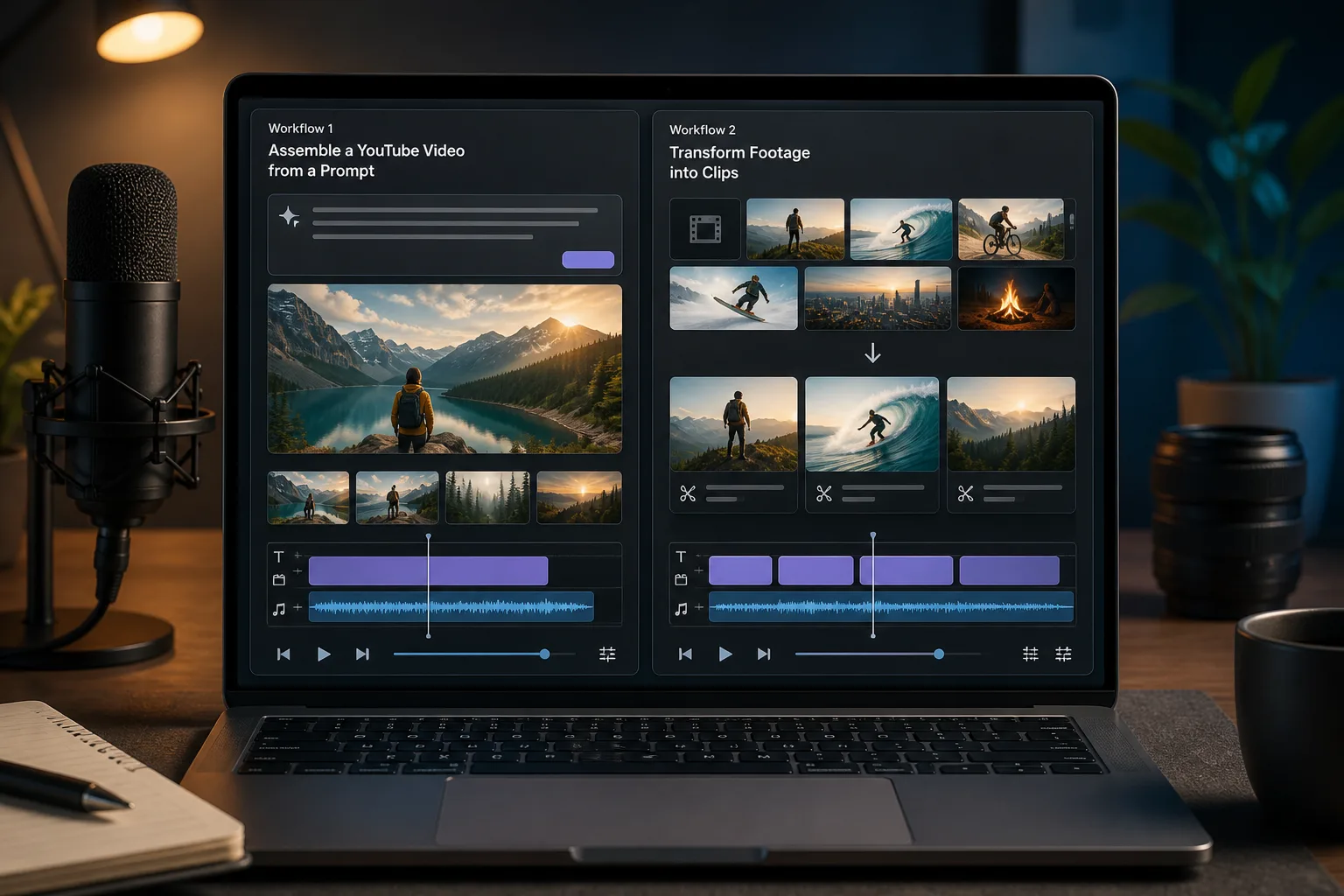

InVideo AI is described as a prompt-led video creator, while Pictory is positioned for repurposing existing content; the listed annual-billing prices are $17 per month for InVideo AI Plus and $25 for Pictory AI Starter. For InVideo vs Pictory YouTube automation, those figures are listed plan prices, not verified prices for the requested comparison period, and the evidence doesn’t establish complete plan limits.
Channel facts
- InVideo AI is described as generating scripts and footage from prompts, while Pictory is described as transforming existing long-form content into short-form videos.
- Findstack lists InVideo AI Plus at $17 per month with annual billing.
- Findstack lists Pictory AI Starter at $25 per month with annual billing.
- Pictory’s lower-tier plans are reported to have fewer premium voices, brand kits, video minutes, and storage.
Your takeaways
- Choose based on your starting material: prompts and new scripts are associated with InVideo AI, while repurposing existing text or long-form content is associated with Pictory.
- Treat listed prices as reference points, and verify plan entitlements, credits, export limits, and watermark terms before budgeting.
- Review stock-media and voice permissions because the available commercial-use claim doesn’t provide detailed license terms.
- Keep human review in the workflow to protect brand image and audience experience.
- Run the same script through InVideo vs Pictory on a free or trial plan and keep the tool that fits your weekly upload pace.
What are the key differences between InVideo and Pictory for InVideo vs Pictory YouTube automation?
InVideo AI is presented as a prompt-led video creator, while Pictory is positioned around repurposing existing material, so the better fit depends on whether you’re starting with an idea or source content. That distinction is the clearest starting point for the InVideo vs Pictory choice.
InVideo’s described agent can handle scripting, voiceovers, and media selection, and another listing says it can generate scripts, visuals, voiceovers, music, captions, and transitions from text prompts. Pictory converts blogs and other text or long-form inputs into videos; its listed functions include automated captions and silence removal for webinar and podcast editing. Its listed voice features include premium voice integration and a voice library that includes voice cloning.
For automated YouTube channels, the evidence doesn’t establish specific aspect-ratio options, stock-footage library terms, voice quality, subtitle accuracy, scene-matching performance, or editing-speed figures. A reported scene-matching improvement figure doesn’t provide a head-to-head result. Compare the workflows, but don’t treat unsupported performance details as settled. The InVideo vs Pictory matchup has no verified winner on those measures.
Which platform is better for producing YouTube videos in bulk?
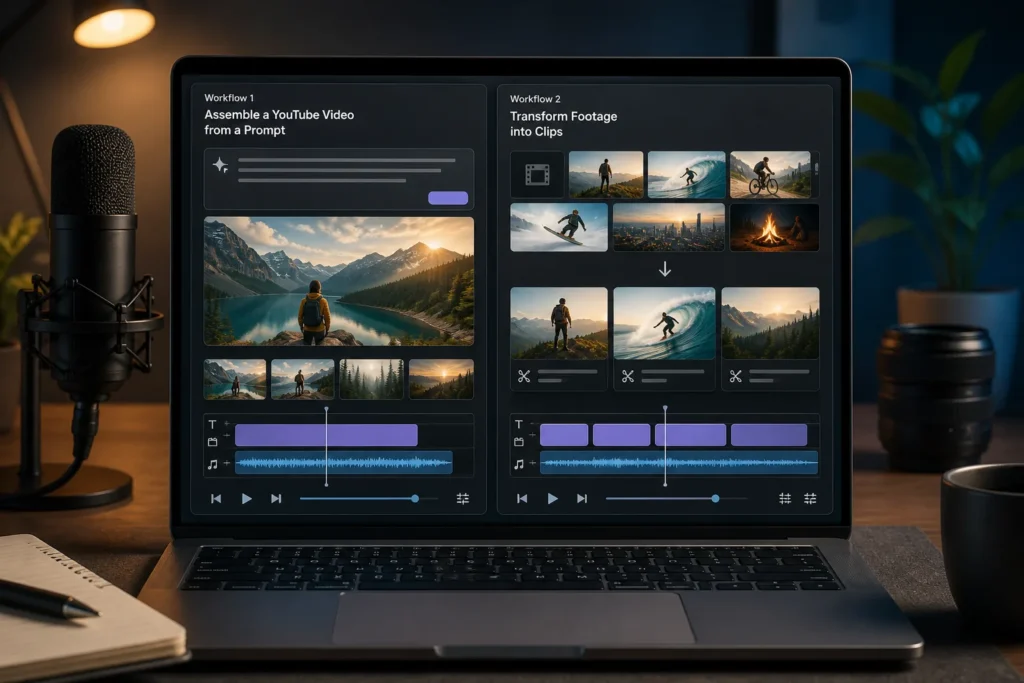
Neither platform has documented batch-workflow limits in the supplied claims, so InVideo vs Pictory YouTube automation can’t be ranked by a verified maximum batch size. The available information instead describes different scaling features: InVideo is positioned for team use, while Pictory has an API-related CMS automation use case.
The comparison lists three integrations for InVideo AI and describes it as better suited to team usage, without naming those integrations. InVideo also offers template-driven social video creation with AI-powered edits, voice cloning, and personalized visuals. Pictory’s API developments are described as enabling enterprises to automate video creation from a content management system, and its Auto-Highlight feature can create multiple short-form clips from long webinar recordings or Zoom meetings.
Pictory’s listed features include brand kits, captions, custom fonts, logos, and avatar support. Those features may support consistent production, but the evidence doesn’t specify batch caps, throughput, or a repeatable bulk workflow. For the InVideo vs Pictory decision, check whether the listed integrations and brand settings match your actual production process. This comparison has no documented batch-limit winner.
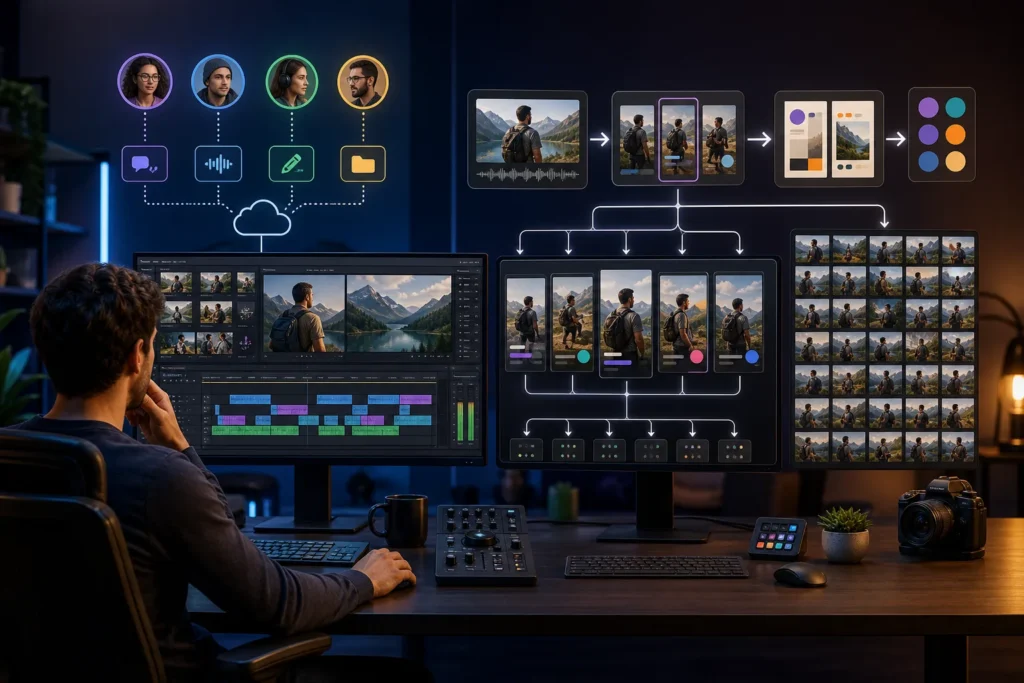
What do the available plan details show about price, limits, resolution, and watermarks?
The listed annual-billing prices are $17 per month for InVideo AI Plus and $25 per month for Pictory AI Starter, but those listings don’t verify prices for the requested comparison period. That makes the inVideo and Pictory price comparison a reference to listed prices, not a confirmed current offer.
Pictory is listed as supporting 1080p output. A separate source reports that InVideo AI cloud rendering was optimized for 4K output, but that report doesn’t establish 4K as an entitlement in a particular subscription plan. Treat export resolution as something to confirm against the plan you’d buy, rather than assuming that a reported capability applies to every tier.
The supplied claims don’t establish complete plan-by-plan export caps, generation-credit amounts, watermarks, or pricing for the requested comparison period. They also don’t support a transparent total-cost-per-video calculation. For InVideo vs Pictory YouTube automation, verify subscription terms, included credits, watermarks, and export limits directly before budgeting. The InVideo vs Pictory choice has no fully verified plan-by-plan comparison here.

Are InVideo and Pictory really unlimited on paid plans?
InVideo AI is reported to include unlimited exports and watermark removal among its paid-plan advantages, but that doesn’t establish unlimited generation or unrestricted use in every situation. For automated YouTube channels, exports and AI generation need to be treated as separate questions.
InVideo AI uses credits, and those credits don’t roll over; the source says heavy users may need higher tiers. That means an unlimited-export claim shouldn’t be read as proof that every part of production has no usage limit. The supplied evidence gives no credit quantities or precise thresholds.
Pictory’s lower-tier plans are reported to offer fewer premium voices, brand kits, video minutes, and storage. The available claims don’t give exact thresholds or a complete definition of “unlimited” for either service. Before choosing a tier for faceless YouTube automation, compare the limits that affect your planned output, including video minutes, credits, storage, and watermark terms. InVideo vs Pictory YouTube automation can’t be settled by the word “unlimited” alone.

How can you turn a script into a finished, scheduled YouTube video?
InVideo AI is described as turning prompts into scripts and footage, while Pictory is described as converting existing text and long-form material into videos. That difference shapes an automated YouTube workflow: begin with a prompt in one tool or source content in the other.
-
InVideo’s agent is reported to handle scripting, voiceovers, and media selection; Pictory can convert blogs to video using text-extraction algorithms.
-
Review the generated script, visuals, captions, and voiceover before publishing. The supplied claims don’t establish a fact-checking process or the time needed to complete these steps.
-
InVideo AI is reported to integrate with social media management tools that allow direct scheduling from its editor. The evidence doesn’t identify the tools or establish an end-to-end YouTube scheduling workflow.
Thumbnail creation, upload-frequency planning, production time per video, and a complete publishing sequence remain unknown in the supplied evidence. For InVideo vs Pictory YouTube automation, treat scheduling as a reported integration capability, not a confirmed complete channel workflow. Faceless YouTube automation does not come with documented time or upload benchmarks.
What copyright and monetization risks should YouTube automation creators check?
The comparison marks commercial usage as included for InVideo AI and not included for Pictory, but the supplied claim doesn’t provide the detailed license terms behind those labels. That distinction matters when evaluating either tool for a channel intended to publish or earn revenue.
Before using stock footage, AI-generated visuals, or AI voiceovers, verify the applicable stock-media licensing and voice-use permissions. The ledger supplies no detailed terms covering permitted uses, attribution, voice cloning consent, or other restrictions, so don’t infer those details from a general commercial-use label.
The available claims also don’t establish YouTube’s reused-content rules, monetization eligibility, or YouTube SEO requirements. They provide no basis to promise that a video made with either tool will qualify for monetization or perform in search. For InVideo vs Pictory YouTube automation, check licenses and platform policies independently before publishing. Each tool has a reported commercial-use distinction, but not a complete rights analysis.
See it in action
Which AI video tools are alternatives to InVideo and Pictory?
Synthesia is identified as a nearby alternative, while Fliki and Plainly have listed input or pricing details that can help frame youTube automation alternatives. The comparison table below shows supported workflow inputs for InVideo AI, Pictory AI, and Fliki.
Fliki can turn long or short text, PowerPoint presentations, blogs, or tweets into video, and its described interface includes a voice library and video customization. Its free plan is listed as allowing up to five minutes per month of watermarked video in 720p; its Standard plan is listed at $28 per month, with a 180-minute limit, no watermark, and 1080p quality.
Synthesia’s listed prices are $29 per month for Starter, $89 per month for Creator, and custom pricing for Enterprise. Plainly’s plans start at $59 per month, with pricing described as mostly volume-based. CapCut supports multi-track editing for TikTok, Reels, and Shorts, but the claims don’t provide its plan or export limits. For automated YouTube channels, these are alternatives to assess by workflow, not proven replacements.
Which YouTube automation niches fit these tools, and what still needs human input?
The supplied evidence doesn’t identify specific niches that InVideo or Pictory can produce effectively, or establish which formats reliably improve audience retention. That leaves niche fit unanswered for InVideo vs Pictory YouTube automation rather than supporting a list of recommended channel categories.
The available advice is about quality control: review and edit automated content carefully to maintain brand image and use automation responsibly. It also says content tools can help generate ideas, but recommends real human effort to provide a strong audience experience, particularly for personalized content.
For a repeatable production process, treat automation as assistance rather than a substitute for review. The supplied claims don’t specify which videography tasks must always be done by a person, nor do they document reliable audience-retention outcomes. For faceless YouTube automation, check each finished video for accuracy, suitable visuals, voice and caption quality, and consistency with your channel before publishing; these are practical review considerations, not measured tool results. Running an automated YouTube channel still requires human judgment wherever your brand and audience experience are concerned.
| Product | Workflow or input types |
|---|---|
| InVideo AI | generating finished videos from text prompts, including scripts, visuals… |
| Pictory AI | converting text, URLs, presentations, documents, images, or long videos into… |
| Fliki | transform long text, short text, PowerPoint presentations, blogs, or tweets into… |
| Product and plan | Listed price |
|---|---|
| InVideo AI Plus, with annual billing | $17 per month |
| Pictory AI Starter, with annual billing | $25 per month |
| Fliki Standard plan | $28 per month |
Faceless channel questions
- Will videography be replaced by AI?
The supplied claims don’t establish that AI will replace videography. They recommend reviewing and editing automated output and keeping human effort central to audience experience, especially for personalized content.
- What app is better than InVideo AI?
No single app is established as better for every use. InVideo AI is described as generating videos from prompts, while Pictory focuses on converting existing content; Synthesia is identified as a nearby alternative.
- What are the best AI niches for YouTube automation?
The supplied evidence doesn’t identify the best YouTube automation niches or show which formats reliably improve audience retention. It recommends using automation for ideas while applying human effort to audience experience and personalized content.
- Is InVideo AI unlimited?
InVideo AI is reported to offer unlimited exports on paid plans, but it also uses credits that don’t roll over, and heavy users may need higher tiers. The evidence doesn’t define all limits or what “unlimited” covers.
