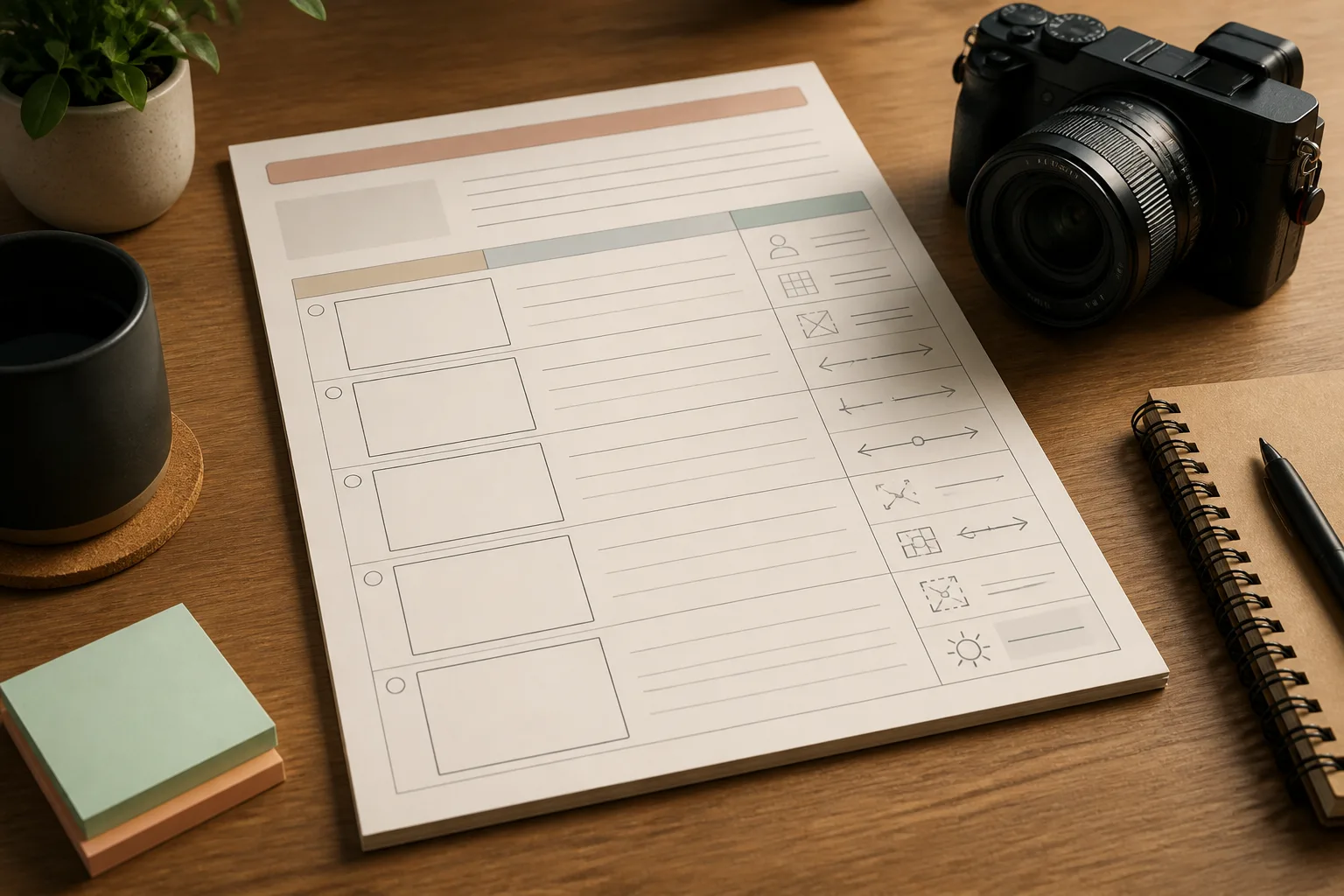

A faceless YouTube script can use a hook, introduction, main points with supporting details, conclusion, and call to action, then pair narration with visuals and on-screen text shot by shot. The YouTube script format can guide that plan, but no source here gives a three-minute word-count target.
Channel facts
- A suggested faceless-video script order is hook, introduction, main points with supporting details, conclusion, and call to action.
- A sample shot uses a time range and separate Visual, Text, and VO labels.
- The available source gives no word-count estimate for a three-minute video at a typical narration pace.
- Script analytics can provide word count and estimated speaking time.
Your takeaways
- Start with the suggested order, then choose a retention-focused or cold-open structure when it better fits the video.
- Use timecodes and separate Visual, Text, and VO labels to plan the production handoff.
- Build a source pack and a brief before drafting, and edit AI-generated content rather than treating it as final.
- Use script analytics to check estimated speaking time, but don’t assume a universal word count for a three-minute video.
- A consistent YouTube script format makes every faceless video faster to write and edit.
What sections belong in the YouTube Script Format: How to Lay Out a Faceless Video Script, and in what order?
A YouTube script template is a repeatable structure for planning and writing a video. For a straightforward faceless video, the suggested order is hook, introduction, main points with supporting details, conclusion, and call to action. The script format gives you a dependable starting sequence, not a requirement to use identical pacing for every topic.
Other structures serve different goals. One retention-focused sequence moves through promise, hook, stakes, roadmap, viewer questions, examples, rehooks, payoff, CTA, and final line. A faceless-video template instead begins with a cold open inside the conflict, followed by context and a first reveal; it then moves through escalation, pattern, a second reveal, takeaway, and final line.
Choose the YouTube script format that fits your video, then make its transitions carry the viewer between sections. Let the CTA follow naturally from the script rather than interrupting its point. The faceless script layout can keep that sequence repeatable while leaving the individual story to supply its details.
How should a faceless video script mark narration, on-screen text, visuals, sound effects, and transitions?
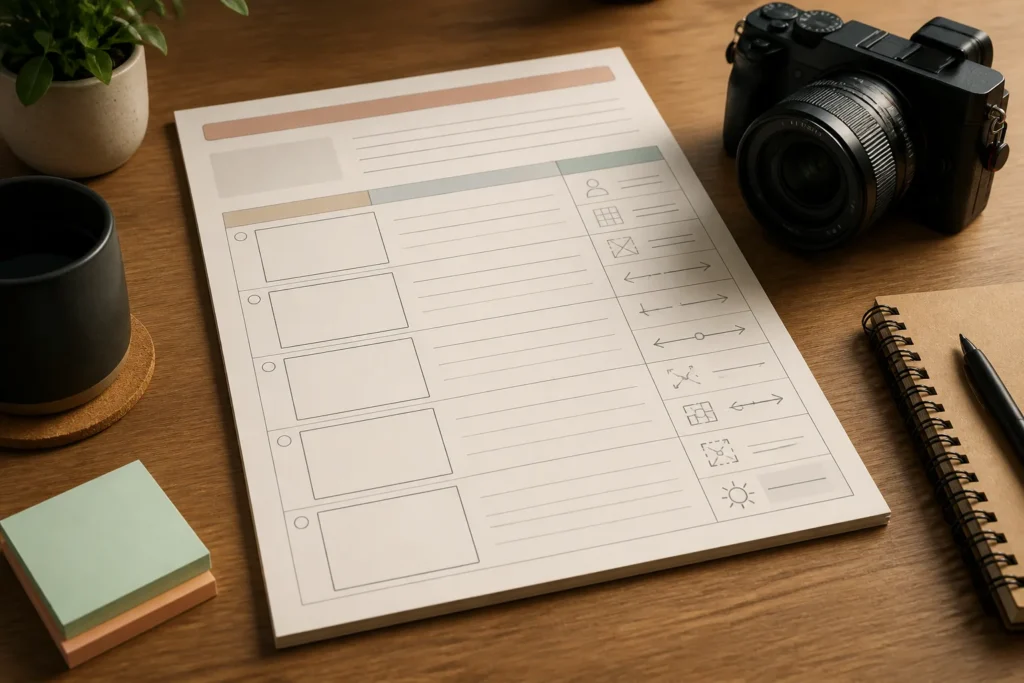
A faceless-video script can pair a timecode and shot with separate Visual, Text, and VO labels, so production can see how footage, captions, and narration connect. The YouTube script format works well as a per-shot handoff when you plan those elements before production.
| Timecode | Visual | Text | VO | Sound/edit notes |
|---|---|---|---|---|
| [time range] | [shot or visual] | [on-screen text] | [narration] | [optional cue] |
Use short visual notes for each major section, with places, objects, motion, or visual style where they help clarify what the viewer sees. A script format can also include B-roll and on-screen-text notes. The sources identify Visual, Text, and VO labels but don’t specify a sound-effect cue convention; transitions can be included in the broader script structure. Keep the YouTube script format clear enough that the visual and narration handoff is readable.
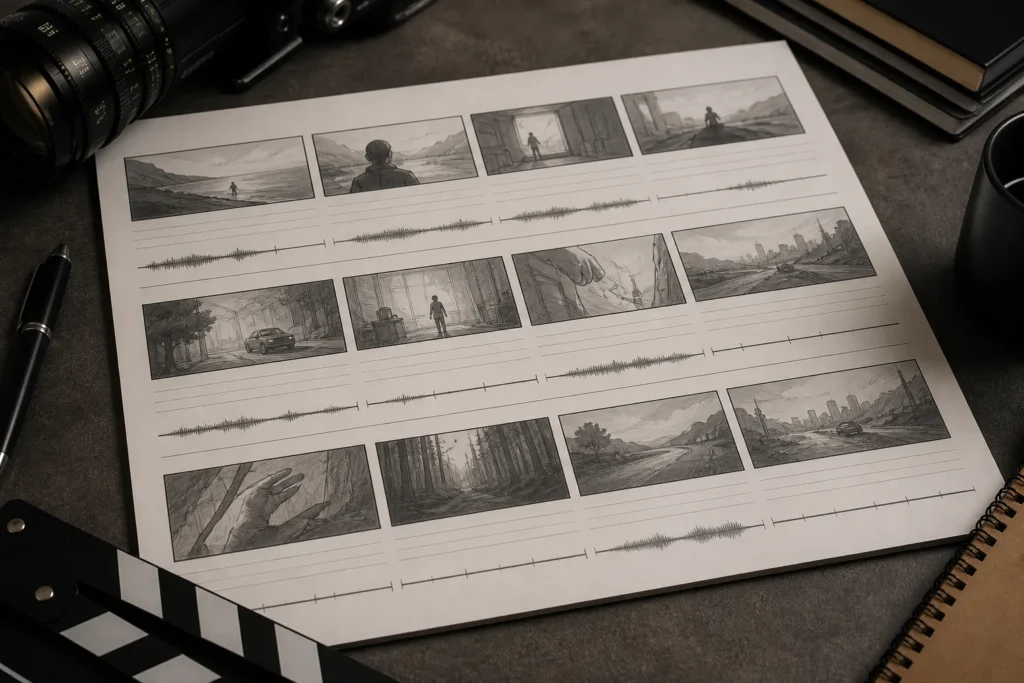
How many words should a script contain for a 3-minute YouTube video at a typical narration pace?
The available source doesn’t provide a word-count estimate for a three-minute YouTube video at a typical narration pace. That means you shouldn’t treat any specific word total or speaking rate as established by this evidence. The faceless script layout should be timed against the narration and material you actually plan to use.
Script analytics can provide a word count and estimated speaking time, which can help you plan video length. They don’t supply a universal words-per-minute target in the available evidence. Use the YouTube script format to organize the draft, then check its estimated speaking time and adjust the script if needed. The script format gives you a layout, not a guaranteed duration; the exact word count for three minutes remains unknown here.
How should the opening seconds be structured to hook viewers and maintain retention?
The opening should quickly reassure viewers that the video is the one they clicked for. The YouTube script format can start with a conclusion, result, problem, or demonstration, then explain the reasoning rather than beginning with a long greeting. Bring the central answer or evidence near the opening.
Make the viewer outcome clear by saying what they can solve, avoid, understand, or decide. A retention-focused sequence can then use viewer questions, examples, rehooks, and payoff as it develops. A rehook resets attention and gives viewers a fresh reason to stay.
The sources don’t provide a second-by-second formula for the first seconds. The faceless script layout can make the promise and evidence clear early, but the recommendation for a fast cut, dramatic zoom, or unexpected sound is specifically for short-form videos. Use the YouTube script format to connect the opening promise to what the video delivers.
What steps can a beginner follow to turn a topic into a complete faceless-video script?
A beginner can turn a topic into a script by deciding the purpose, audience, and angle before drafting, then building an outline and writing the sections from it. Use the script format as the production plan, not just as a place to store narration.
- Prepare a source pack with primary facts or events, supporting details, accuracy-sensitive terms and names, visual anchors, a central question, and an angle.
- Write a brief that identifies the viewer, promise, intended understanding, required and optional facts, narration tone, pacing, and visual exclusions.
- Define episode length, segment structure, hook pattern, visual style, and voice in a reusable format brief.
- Draft each section, treating AI-generated script content as a starting point to edit rather than a finished draft.
- Read the script aloud, then revise awkward phrasing and flow.
For a first episode, use timecodes, gather or generate visuals, record or generate voiceover, and note what took longer than expected. The YouTube script format keeps those planning and production steps together. Reuse the faceless script layout as you refine the process.
How much detail should visual directions include, and what trade-offs arise between a detailed script and room for improvisation?
Visual directions can be short notes for each major section, specifying places, objects, motions, or visual style where those details help guide production. The YouTube script format can state what a shot needs to communicate without turning every note into a long description.
Write narration for the ear: use short sentences, avoid buried clauses, and remove words you wouldn’t say aloud. That keeps voiceover lines easier to read and gives each visual note a clear companion in the script. The script format can separate the spoken line from visual direction so those instructions don’t get confused.
The available sources don’t establish a general rule for balancing detailed direction against room for improvisation. They also don’t say how much freedom to leave for a narrator or editor. Use the YouTube script Format: How to Lay Out a Faceless Video Script to record the visual details your production needs, while recognizing that the right level of additional direction isn’t specified by this evidence.
How can you choose a script format based on video length, narration pace, and the visuals available?
Choose a script format that matches the video’s length and production style: short videos need tighter scripting, while long-form videos need stronger structure, examples, rehooks, and pacing shifts. Faceless and voiceover-heavy videos usually benefit from word-for-word scripts, while talking-head creators may prefer detailed outlines. The YouTube script format should account for the visuals available and how narration fits them.
A timecoded, per-shot layout lets you plan narration against visuals, with a sample shot using a time range and separate Visual, Text, and VO labels. One history-shorts creator uses a six-beat skeleton with beats of 3–7 seconds, each pairing a visual, on-screen text, and voiceover line; that is one example, not a universal timing rule.
Script analytics can estimate speaking time, but the available sources provide neither a universal narration pace nor a three-minute word-count target. Use the faceless script layout to test timing against your draft. The YouTube script format can then be adjusted to the chosen format.
See it in action
| Format | Stated structure | Timing or production details |
|---|---|---|
| A video script structure | A video script structure can include introductions, main points, transitions… | — |
| retention-focused script structure | The article’s retention-focused script structure is promise, hook, stakes… | — |
| faceless-video template | The faceless-video template starts with a cold open inside the conflict, then… | — |
| repeatable faceless-video format | A repeatable faceless-video format uses the same structure for every episode. | — |
| one history-shorts creator’s fixed script skeleton | One history-shorts creator’s fixed script skeleton uses six beats of 3–7… | A sample shot is marked with a time range and separate Visual, Text, and VO… |
| 45-minute explainer | For a 45-minute explainer, the source gives a possible order of hook, context… | — |
Faceless channel questions
- How to write the script for a video?
Start by defining the video’s purpose, audience, and angle, then build an outline and draft each section from it. Read the draft aloud and revise awkward phrasing; treat AI-generated script text as a starting point, not a finished script.
- What is the second rule on YouTube?
The available sources don’t give a second-by-second formula for a YouTube video’s first seconds. They recommend an immediate hook that reassures viewers the video matches what they clicked for, then opening with a conclusion, result, problem, or demonstration.
- How to start with faceless YouTube videos?
To start with faceless YouTube videos, define a repeatable format brief covering episode length, segment structure, hook pattern, visual style, and voice. For a first episode, use timecodes, gather or generate visuals, and record or generate voiceover.
- How long is a minute video script?
The available source doesn’t provide a word-count estimate for a three-minute video at a typical narration pace. Script analytics can show word count and estimated speaking time, but the source gives no universal words-per-minute target.
